
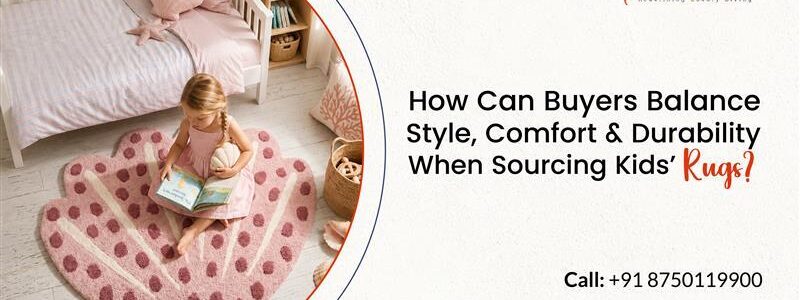
Sourcing the right kids’ rug involves more than choosing colourful patterns or playful designs. This blog explores the key factors B2B buyers should consider when sourcing kids playroom rugs, kids bedroom rugs, nursery rugs, kids room rugs and kids room carpets, including material, comfort, durability, maintenance, sizing, design versatility and customisation. For retailers, interior designers and project buyers, understanding these factors can help create collections and spaces that are both visually appealing and practical for everyday use.
Sourcing rugs for children’s spaces can be more challenging than it appears. A product may look playful and attractive, but B2B buyers also need to consider comfort, durability, maintenance, material, sizing and long-term appeal.
For retailers, interior designers, hospitality businesses and project buyers, the challenge is finding a kids’ rug that meets aesthetic expectations while also performing well in everyday environments.
1. Start With How the Rug Will Be Used
The right rug depends largely on the space.
A nursery rug may be chosen to create a soft, warm and welcoming environment. A kids bedroom rug may need to complement the existing furniture and décor, while a kids playroom rug is likely to experience more frequent movement and everyday activity.
Understanding the purpose of the space helps buyers determine the appropriate material, construction, size and design.
For B2B buyers, this also means building collections that address different customer needs rather than relying on one type of rug for every application.
2. Can the Design Stay Playful Without Becoming Too Specific?
Design is often one of the first things customers notice, but children’s interiors change as they grow.
Highly specific themes may appeal to a particular age group, while versatile patterns can remain relevant for longer. Nature-inspired motifs, animals, geometric patterns, stars, abstract shapes and soft colour combinations can create a playful atmosphere without limiting the rug’s appeal.
For retailers and interior designers, the ideal kids room rug should add personality while still working with the overall interior.
The objective is to create a balance between child-friendly design and long-term visual appeal.
3. How Important Is Material Selection?
Material plays an important role in determining the look, feel and performance of a rug.
Depending on the intended application, buyers can explore materials such as:
- Wool
- Cotton
- Viscose
- Jute and other natural fibres
- Blended materials
Each material offers different characteristics in terms of texture, appearance, maintenance and durability.
For example, wool can provide warmth and a soft, premium feel, while cotton can offer a lighter and more casual aesthetic. The right material should ultimately be selected according to the requirements of the collection or project.
4. Will the Rug Handle Everyday Activity?
A children’s room can be a high-use environment.
A kids room carpet or rug placed in a play area may experience frequent walking, sitting and playing. This makes construction and finishing important considerations for buyers.
A visually appealing rug that does not perform well under regular use may not deliver the long-term value expected by retailers or project buyers.
When evaluating play room rugs, buyers should therefore consider construction quality alongside colour, pattern and texture.
5. Is Maintenance Practical?
Children’s spaces are active, which makes maintenance another important consideration.
Buyers should evaluate how the selected material and construction are likely to perform with regular cleaning and everyday use. Practical colours, suitable materials and appropriate finishing can all contribute to easier maintenance.
For retailers, this information can also help sales teams recommend products according to the customer’s lifestyle and requirements.
6. Are You Offering Enough Size Options?
A rug that works perfectly in a nursery may not be suitable for a larger playroom.
Different room layouts require different dimensions. Smaller rugs may work well beside a bed or within a defined activity area, while larger rugs can help create a cohesive floor space.
For B2B collections, offering multiple sizes can make children’s rugs more versatile and increase their suitability across different interiors.
Custom sizing can be especially useful for interior designers and project buyers working with specific floor plans.
7. Can the Rug Grow With the Interior?
One of the challenges when sourcing children’s rugs is finding designs that remain relevant as children grow.
For B2B buyers, timeless designs with playful elements can provide greater versatility than products designed around a very narrow age group.
A rug inspired by nature, geometric forms or abstract patterns can work across different stages of childhood while still maintaining a youthful character.
This can make the product more appealing for both retailers and customers looking for longer-lasting interior solutions.
8. Does the Manufacturer Offer Customisation?
Standard products may not always meet the requirements of a specific collection or project.
Interior designers may need a particular size or colour, while retailers may want exclusive designs for their product range.
Custom rug manufacturing can allow buyers to work with requirements such as:
- Custom sizes
- Custom colours
- Bespoke patterns
- Different materials
- Specific constructions
- Collection-specific designs
For B2B buyers, this flexibility can be an important advantage when developing a differentiated product range.
9. Why Does the Manufacturing Partner Matter?
Choosing the right children’s rug is only one part of the sourcing process. The manufacturing partner behind the product is equally important.
Buyers should consider whether the manufacturer can provide:
Consistent quality: Larger orders require consistency in colour, construction, finishing and overall appearance.
Manufacturing expertise: Different rug constructions and materials require specialised knowledge and production capabilities.
Customisation: Flexible manufacturing allows buyers to develop products according to their specific requirements.
Quality control: Proper inspection throughout production helps maintain consistency and reduce quality-related issues.
Export experience: International B2B buyers benefit from working with manufacturers familiar with export requirements and global supply expectations.
For retailers, designers and project buyers, these factors can make the difference between simply sourcing a product and building a reliable long-term supply relationship.
Conclusion
Sourcing kids’ rugs successfully requires a balance between design, comfort, durability and practicality. For B2B buyers, the decision goes beyond how a rug looks in a catalogue. The material, construction, size, maintenance requirements, design versatility and manufacturing capabilities all contribute to the product’s long-term value.
Whether you are sourcing a kids bedroom rug for a retail collection, a nursery rug for a residential project or kids playroom rugs for a larger interior requirement, choosing the right manufacturing partner can help ensure consistency and flexibility at every stage.
With the right approach, children’s rugs can become products that are not only visually appealing but also functional, versatile and suitable for everyday spaces.
At Shree Sai International, we work with B2B buyers to develop handcrafted rugs based on specific design, material, size and project requirements, helping bring ideas from concept to finished product.
Looking to Source Kids’ Rugs for Your Collection or Project?
Connect with Shree Sai International to discuss your requirements for custom kids’ rugs, playroom rugs, nursery rugs and other handcrafted floor coverings.
For export inquiries, bulk orders, or project collaborations:
📧 info@weavinghands.co.in
📞 +91 8750119900
🌐 https://shreesaiinternational.com/