
Restaurant

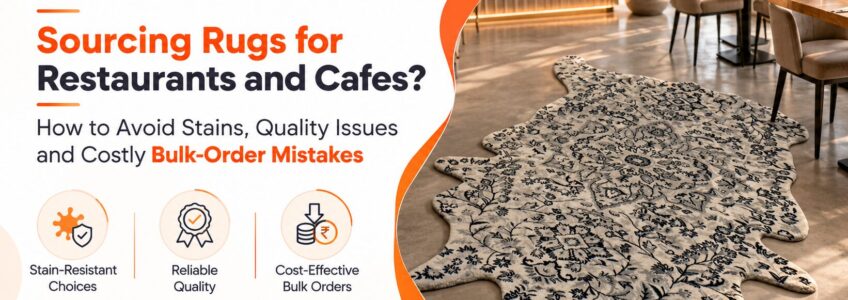
Sourcing Rugs for Restaurants and Cafes? How to Avoid Stains, Quality Issues and Costly Bulk-Order Mistakes

Restaurants and cafés deal with food spills, heavy foot traffic and frequent cleaning every day. Choosing the wrong rugs can lead to stubborn stains, premature wear, higher maintenance costs and inconsistent interiors across multiple locations.

For restaurant owners, hospitality procurement teams, interior designers and importers, sourcing rugs in bulk requires more than selecting attractive designs. Buyers need products that suit their intended use, meet quality expectations and come from a reliable supplier.

This guide explains how to choose the right rugs for restaurants and cafes while avoiding common sourcing mistakes.

1. How to Choose Rugs That Can Handle Daily Restaurant Challenges

Restaurant rugs must balance appearance with practical requirements. Before placing an order, buyers should consider three important factors.

Stain resistance: Food, coffee and beverage spills are common in dining spaces. When sourcing stain resistant rugs for dining areas, ask suppliers about the material, protective treatments and recommended cleaning methods.

Durability: Entrances, walkways and seating areas experience different levels of foot traffic. Consider the rug’s fibre, construction and pile height to ensure it is suitable for the intended application.

Easy maintenance: Easy to clean rugs for hospitality should fit the property’s regular cleaning procedures. Buyers should confirm care instructions and assess whether the material can withstand frequent maintenance.

Selecting rugs according to the specific application can help reduce maintenance challenges and support their long-term use.

2. Best Carpet for Restaurant Flooring: What Should Buyers Consider?

The best carpet for restaurant flooring depends on the space, expected foot traffic and cleaning requirements.

  • Flatwoven rugs: Suitable for selected dining and seating areas where a low-profile design is preferred.
  • Low-pile rugs: Worth considering in seating areas where chairs move frequently and routine cleaning matters.
  • Wool rugs: Offer natural texture and warmth but require careful consideration of cleaning requirements.
  • Synthetic-fibre rugs: May provide practical options depending on their construction, maintenance needs and intended use.

No single material works for every restaurant. Buyers should evaluate product specifications, maintenance requirements and suitability before making a bulk purchase.

3. Rug Ideas for Cafe Interiors Without Compromising Functionality

The right rug can strengthen a café’s visual identity while helping define different areas.

  • Minimalist cafés: Neutral colours and subtle patterns complement simple, contemporary interiors.
  • Rustic cafés: Textured rugs and earthy tones work well with wooden furniture and natural finishes.
  • Modern cafés: Geometric patterns and contrasting colours can create a distinctive look.
  • Premium dining spaces: Rich textures and carefully selected designs can enhance the ambience of lounge and seating areas.

These rug ideas for cafe interiors should be evaluated alongside cleaning requirements, placement and expected foot traffic.

For café chains and restaurant groups, maintaining consistent colours, dimensions and construction across multiple outlets is equally important.

4. Common Bulk-Order Mistakes That Buyers Should Avoid

Bulk sourcing involves several challenges that can affect project budgets, delivery schedules and product consistency.

Quality differences between samples and bulk orders: Always approve product samples and document the agreed specifications for colour, dimensions, materials and construction before production begins.

Unclear delivery timelines: Confirm minimum order quantities, sampling schedules, production lead times and shipping arrangements before committing to a project deadline.

Unexpected customization limitations: Discuss available sizes, colours, patterns and customization requirements in advance to avoid issues during production.

Ignoring maintenance requirements: A rug that requires specialized cleaning may not suit a busy restaurant. Confirm its care instructions before ordering.

Unclear export arrangements: International buyers should clarify packaging, shipping terms, export documentation and delivery expectations with their supplier.

Careful planning helps buyers avoid preventable sourcing issues and make more informed purchasing decisions.

5. How to Select a Reliable Restaurant Rug Supplier for Bulk Orders

Finding the right restaurant rug supplier for bulk orders is essential for businesses that need consistent quality and dependable supply.

Before finalizing a supplier, evaluate:

  • Manufacturing capabilities: Check whether the supplier can handle the required quantity and product specifications.
  • Quality-control procedures: Understand how products are inspected before dispatch.
  • Sample approval: Ensure the approved sample serves as the reference for bulk production.
  • Customization options: Confirm feasibility, minimum quantities and production requirements.
  • Export experience: Assess the supplier’s ability to coordinate international orders, packaging and documentation.
  • Communication and timelines: Establish clear expectations for production updates and delivery.

Comparing suppliers on these factors helps businesses evaluate more than just the quoted price.

6. Sourcing Handmade Rugs in Bulk with Shree Sai

Shree Sai, operating under Weavinghands Rugs Pvt. Ltd., is a manufacturer and exporter of handmade rugs and carpets with roots dating back to 1984.

For international buyers, importers, retailers, interior designers and hospitality businesses, selecting the right supplier begins with clearly defined product and commercial requirements.

Before placing an order, buyers should discuss the intended application, preferred materials, design specifications, order quantity, customization requirements and delivery schedule.

Whether sourcing rugs for restaurants and cafes or planning a larger hospitality project, approved samples and clearly documented specifications can help establish a smoother procurement process.

Looking for a B2B rug supplier for your next project? Contact Shree Sai to discuss your bulk sourcing requirements.

Conclusion

Sourcing rugs for restaurants and cafes requires careful consideration of stains, durability, cleaning requirements and design. For B2B buyers, sample-to-bulk consistency, supplier reliability and export coordination are equally important.

By defining specifications early and evaluating suppliers carefully, businesses can reduce sourcing

For export inquiries, bulk orders, or project collaborations:
📧 info@weavinghands.co.in
📞 +91 8750119900
🌐 https://shreesaiinternational.com/
Custom Rugs

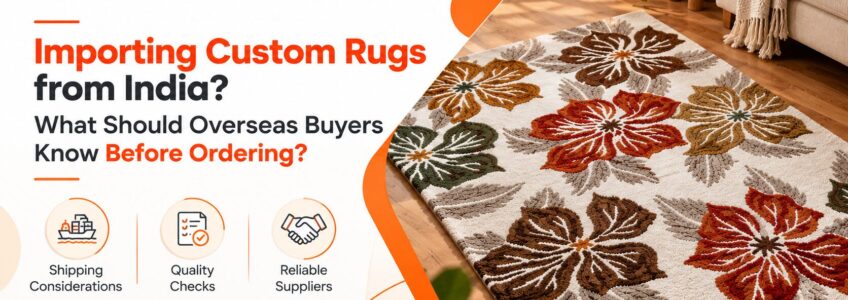
Importing Custom Rugs from India? What Should Overseas Buyers Know Before Ordering?

You approved the sample from thousands of kilometres away, the colors looked right on screen, and then the container arrived with a different shade, a few rugs damaged in transit, and a delivery date that had already slipped. For importers, distributors, retailers and designers sourcing from overseas, a custom rug order that goes wrong costs far more than money. It costs seasons, projects and client trust.

Most of these problems are avoidable. This guide explains what to ask, what to confirm in writing, and how a reliable manufacturer and exporter should handle your custom rugs from first sketch to final shipment.

Why Buyers Source Custom Rugs from India

India is a major global source for handmade and handcrafted rugs, offering deep weaving skills, a wide choice of materials and the flexibility to make rugs to your exact design. Standard catalog rugs rarely match what overseas projects need. Designers need exact dimensions, retailers want designs competitors don’t have, and hotels and restaurants need colors that suit their brand. Custom rugs solve all of this and help you stand out in your market.

Common Problems Importers Face

If you have imported rugs before, you may recognize these:

  • Sample and bulk don’t match. The approved sample looks right, but the production lot differs in color, pile or texture, and you only find out after it arrives.
  • Unclear pricing. Quotes come without a clear breakdown, and costs shift after you confirm.
  • Uncertain order requirements. It’s hard to learn minimum quantities before investing time in development.
  • Shipment delays. Late dispatch means missed retail seasons, project handovers and opening dates.
  • Transit damage. Poor packing leads to damp, crushed or soiled rugs on arrival.
  • Documentation confusion. Missing or incorrect export papers can hold up customs clearance.
  • Size errors. Without agreed tolerances, custom size rugs can arrive unusable.
  • Slow communication across time zones. Replies take days, and you can’t see where your order stands.
  • Design confidentiality. You worry your exclusive design may be offered to other buyers.
  • Batch inconsistency. Repeat orders don’t match the first one.

The rest of this guide shows how to reduce each of these risks.

Custom Size Rugs: Get the Dimensions Right

Custom size rugs are widely used in hotel corridors, restaurants, offices, staircases and large living spaces. To avoid errors:

  1. Share exact dimensions and agree on an acceptable tolerance in writing.
  2. Specify the shape: rectangle, round, runner or irregular.
  3. Confirm whether the size includes borders or fringe.
  4. Approve a sample or size confirmation before production starts.

Custom Designed Rugs: From Your Idea to the Loom

You can start with a sketch, a moodboard, a color reference or an existing rug you want to adapt. A strong manufacturer should:

  • Convert your artwork into a loom-ready design using computerized design tools.
  • Provide a sample for your approval before bulk production.
  • Match colors through dyed yarn, not just screen colors.
  • Agree on design confidentiality with you in writing when you need exclusivity.

At Shree Sai, an in-house design team handles this stage, so your design stays under one roof from the start.

Handmade Custom Rugs: Texture and Craftsmanship

Handmade rugs give depth and character that machines struggle to replicate, which makes them a strong fit for boutique hotels, premium retail and high-end residential projects. Because they are crafted by hand, ask early about lead time and how consistency is controlled across looms and batches.

Custom Rugs for Home: A Profitable Retail Category

Retailers and online sellers can use custom rugs for home to offer something unique and earn better margins. Popular options include:

  • Living room and bedroom rugs in wool, cotton, chenille, jute and blends
  • Kids’ rugs and plush rugs
  • Dhurries, kilims and braided rugs
  • Bath rugs and accessories

What to Confirm Before You Place an Export Order

Before you confirm any custom rug order, agree on these points in writing:

  1. Specifications: Size, tolerance, material, construction, pile height and color references.
  2. Approved sample: Keep it as the reference for production.
  3. Quantity and price: With a clear breakdown.
  4. Shipping and payment terms: So there are no surprises on cost or timing.
  5. Packing method: To protect rugs from moisture and damage in transit.
  6. Production and dispatch timeline: With a realistic delivery date for your market.
  7. Export documents: The papers you need for customs clearance in your country.
  8. Pre-shipment checks: Ask how quality is verified before dispatch.

A good exporter will answer these clearly before you commit.

How Our Custom Rug Process Works

  1. Share your requirements: Size, design, material, quantity and destination country.
  2. Receive a clear quote: With specifications, shipping and payment terms, and timeline.
  3. Approve the sample: You sign off on design and color before production.
  4. Production with quality checks: Weaving, dyeing, cleaning and inspection happen in our own facilities.
  5. Packing and dispatch: Your finished order is packed for export and shipped to your destination.

Why Overseas Buyers Choose Shree Sai

  • Over 40 years of experience as a manufacturer and exporter of rugs and home furnishings, since 1984.
  • Own manufacturing across Mirzapur, Panipat and Sitapur.
  • Capacity of 15,000+ sq. meters per month, with 240 frame looms and 390 handlooms.
  • Separate in-house units for weaving, dyeing and cleaning, across about 70,000 sq. ft.
  • A wide range of materials: Wool, cotton, chenille, jute, viscose and blends.
  • Project experience in hotels, restaurants, corporate and real estate spaces.
  • A global client base, with products supplied to buyers around the world.

Frequently Asked Questions

1. Do you export custom rugs worldwide?

Yes. Shree Sai is a manufacturer and exporter, and we supply buyers around the world. Share your destination country and we will confirm shipping details in your quote.

2. What is the minimum order quantity for custom rugs?

The minimum order depends on the rug construction, size, material and design complexity. Share your requirements with us and we will confirm the MOQ along with your quote.

3. Can I order custom size rugs?

Yes. We make custom size rugs in rectangle, round, runner and other shapes. Share your exact dimensions and tolerance, and we will confirm feasibility.

4. Can you make a rug from my own design or sketch?

Yes. You can send a sketch, image, moodboard or color reference. Our design team converts it into a loom-ready design and prepares a sample for your approval.

5. Will the bulk order match the approved sample?

That is the purpose of the sample stage. Once you approve the sample, it becomes the reference for production, and finished goods go through quality checks before dispatch.

6. Can I get a sample before placing a bulk order?

Yes. Sampling is part of our custom rug process. Share your design and specifications, and we will confirm sample details, cost and timeline.

7. Which materials are available for custom rugs?

We work with wool, cotton, chenille, jute and blends. We also offer viscose and other options. Tell us your use case and we will suggest the right material.

8. How long does production and delivery take?

Lead time depends on the rug type, quantity, design complexity and destination. We confirm sample, production and dispatch timelines in your quote, before you commit.

9. What shipping and payment terms do you offer?

We discuss shipping and payment terms with each buyer and confirm them in the quote, based on your order and destination.

10. How are rugs packed for export?

Rugs are packed for export to protect them in transit. Tell us your destination and any packing requirements, and we will confirm the packing method with your quote.

11. Will my design be kept confidential?

If your design is exclusive, tell us at the start. We will discuss and agree on confidentiality terms with you in writing before development begins.

12. Do you supply rugs for hotels, restaurants and corporate projects?

Yes. We supply rugs for hotels, restaurants, corporate offices and real estate projects, made to your project’s size and design requirements.

13. How do I get a quote?

Send us your size, design, material, quantity and destination country. We will respond with a quote and sample plan.

Ready to Develop Your Custom Rug Range?

Send us your size, design, quantity and destination, and our team will prepare a sample plan and quote for you.

Call / WhatsApp: +91 8750119900

Email: info@weavinghands.co.in

Showroom: 112, Block A, Sector-80, Noida (U.P.) – 201306, India

Factory: Katra Bazirao, Mirzapur-231001 (U.P.), India

Shree Sai is a brand of Weavinghands Rugs Pvt. Ltd.

Looking for a rug manufacturer in India? See how we work with importers, retailers and hotel projects: Rug & Carpet Manufacturer in India.