
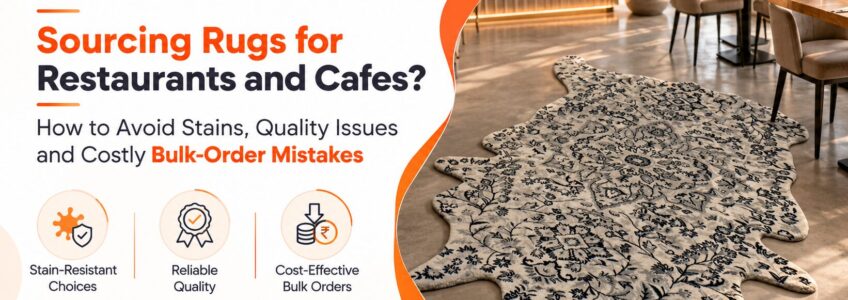
Restaurants and cafés deal with food spills, heavy foot traffic and frequent cleaning every day. Choosing the wrong rugs can lead to stubborn stains, premature wear, higher maintenance costs and inconsistent interiors across multiple locations.
For restaurant owners, hospitality procurement teams, interior designers and importers, sourcing rugs in bulk requires more than selecting attractive designs. Buyers need products that suit their intended use, meet quality expectations and come from a reliable supplier.
This guide explains how to choose the right rugs for restaurants and cafes while avoiding common sourcing mistakes.
1. How to Choose Rugs That Can Handle Daily Restaurant Challenges
Restaurant rugs must balance appearance with practical requirements. Before placing an order, buyers should consider three important factors.
Stain resistance: Food, coffee and beverage spills are common in dining spaces. When sourcing stain resistant rugs for dining areas, ask suppliers about the material, protective treatments and recommended cleaning methods.
Durability: Entrances, walkways and seating areas experience different levels of foot traffic. Consider the rug’s fibre, construction and pile height to ensure it is suitable for the intended application.
Easy maintenance: Easy to clean rugs for hospitality should fit the property’s regular cleaning procedures. Buyers should confirm care instructions and assess whether the material can withstand frequent maintenance.
Selecting rugs according to the specific application can help reduce maintenance challenges and support their long-term use.
2. Best Carpet for Restaurant Flooring: What Should Buyers Consider?
The best carpet for restaurant flooring depends on the space, expected foot traffic and cleaning requirements.
- Flatwoven rugs: Suitable for selected dining and seating areas where a low-profile design is preferred.
- Low-pile rugs: Worth considering in seating areas where chairs move frequently and routine cleaning matters.
- Wool rugs: Offer natural texture and warmth but require careful consideration of cleaning requirements.
- Synthetic-fibre rugs: May provide practical options depending on their construction, maintenance needs and intended use.
No single material works for every restaurant. Buyers should evaluate product specifications, maintenance requirements and suitability before making a bulk purchase.
3. Rug Ideas for Cafe Interiors Without Compromising Functionality
The right rug can strengthen a café’s visual identity while helping define different areas.
- Minimalist cafés: Neutral colours and subtle patterns complement simple, contemporary interiors.
- Rustic cafés: Textured rugs and earthy tones work well with wooden furniture and natural finishes.
- Modern cafés: Geometric patterns and contrasting colours can create a distinctive look.
- Premium dining spaces: Rich textures and carefully selected designs can enhance the ambience of lounge and seating areas.
These rug ideas for cafe interiors should be evaluated alongside cleaning requirements, placement and expected foot traffic.
For café chains and restaurant groups, maintaining consistent colours, dimensions and construction across multiple outlets is equally important.
4. Common Bulk-Order Mistakes That Buyers Should Avoid
Bulk sourcing involves several challenges that can affect project budgets, delivery schedules and product consistency.
Quality differences between samples and bulk orders: Always approve product samples and document the agreed specifications for colour, dimensions, materials and construction before production begins.
Unclear delivery timelines: Confirm minimum order quantities, sampling schedules, production lead times and shipping arrangements before committing to a project deadline.
Unexpected customization limitations: Discuss available sizes, colours, patterns and customization requirements in advance to avoid issues during production.
Ignoring maintenance requirements: A rug that requires specialized cleaning may not suit a busy restaurant. Confirm its care instructions before ordering.
Unclear export arrangements: International buyers should clarify packaging, shipping terms, export documentation and delivery expectations with their supplier.
Careful planning helps buyers avoid preventable sourcing issues and make more informed purchasing decisions.
5. How to Select a Reliable Restaurant Rug Supplier for Bulk Orders
Finding the right restaurant rug supplier for bulk orders is essential for businesses that need consistent quality and dependable supply.
Before finalizing a supplier, evaluate:
- Manufacturing capabilities: Check whether the supplier can handle the required quantity and product specifications.
- Quality-control procedures: Understand how products are inspected before dispatch.
- Sample approval: Ensure the approved sample serves as the reference for bulk production.
- Customization options: Confirm feasibility, minimum quantities and production requirements.
- Export experience: Assess the supplier’s ability to coordinate international orders, packaging and documentation.
- Communication and timelines: Establish clear expectations for production updates and delivery.
Comparing suppliers on these factors helps businesses evaluate more than just the quoted price.
6. Sourcing Handmade Rugs in Bulk with Shree Sai
Shree Sai, operating under Weavinghands Rugs Pvt. Ltd., is a manufacturer and exporter of handmade rugs and carpets with roots dating back to 1984.
For international buyers, importers, retailers, interior designers and hospitality businesses, selecting the right supplier begins with clearly defined product and commercial requirements.
Before placing an order, buyers should discuss the intended application, preferred materials, design specifications, order quantity, customization requirements and delivery schedule.
Whether sourcing rugs for restaurants and cafes or planning a larger hospitality project, approved samples and clearly documented specifications can help establish a smoother procurement process.
Looking for a B2B rug supplier for your next project? Contact Shree Sai to discuss your bulk sourcing requirements.
Conclusion
Sourcing rugs for restaurants and cafes requires careful consideration of stains, durability, cleaning requirements and design. For B2B buyers, sample-to-bulk consistency, supplier reliability and export coordination are equally important.
By defining specifications early and evaluating suppliers carefully, businesses can reduce sourcing
For export inquiries, bulk orders, or project collaborations:
📧 info@weavinghands.co.in
📞 +91 8750119900
🌐 https://shreesaiinternational.com/